Cultural and Historical Sights

City Palace
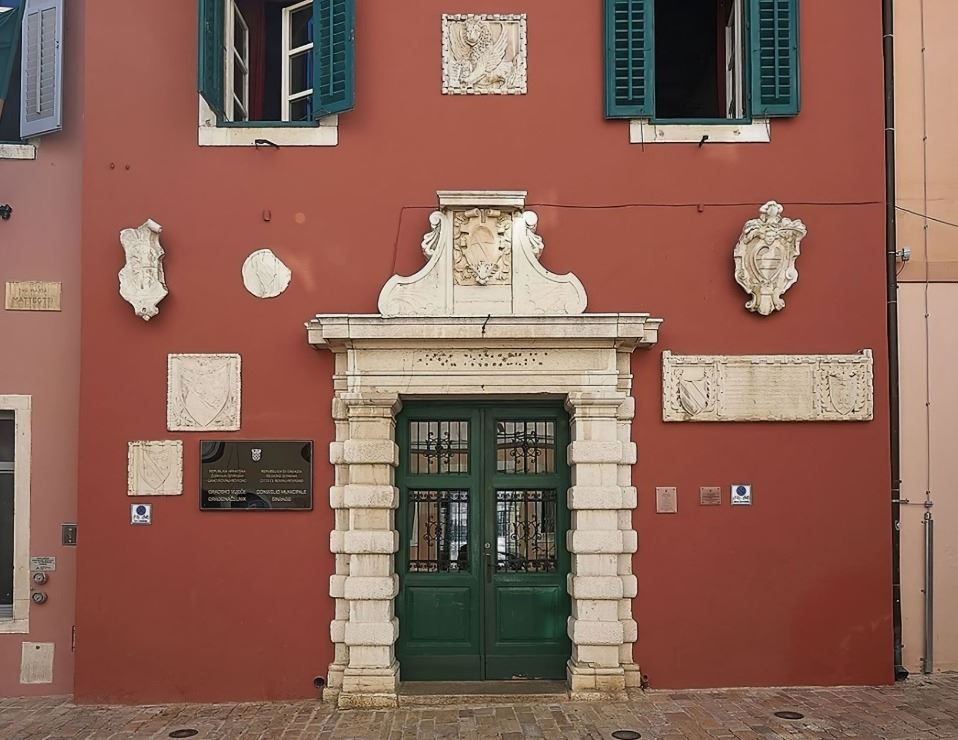
The seat of the City mayor and the entire city administration, once this was the Praetorian Palace whose „foundations“ date back to 1308. In one part of the ground floor there was also a prison while on the upper floor there was City Council Hall, offices and the file room. The front and the atrium were restored in 1850 and 1860 and in 1935 when the coats of arms were placed there representing Venetian and Rovinj families and the City.

Island – Peninsula

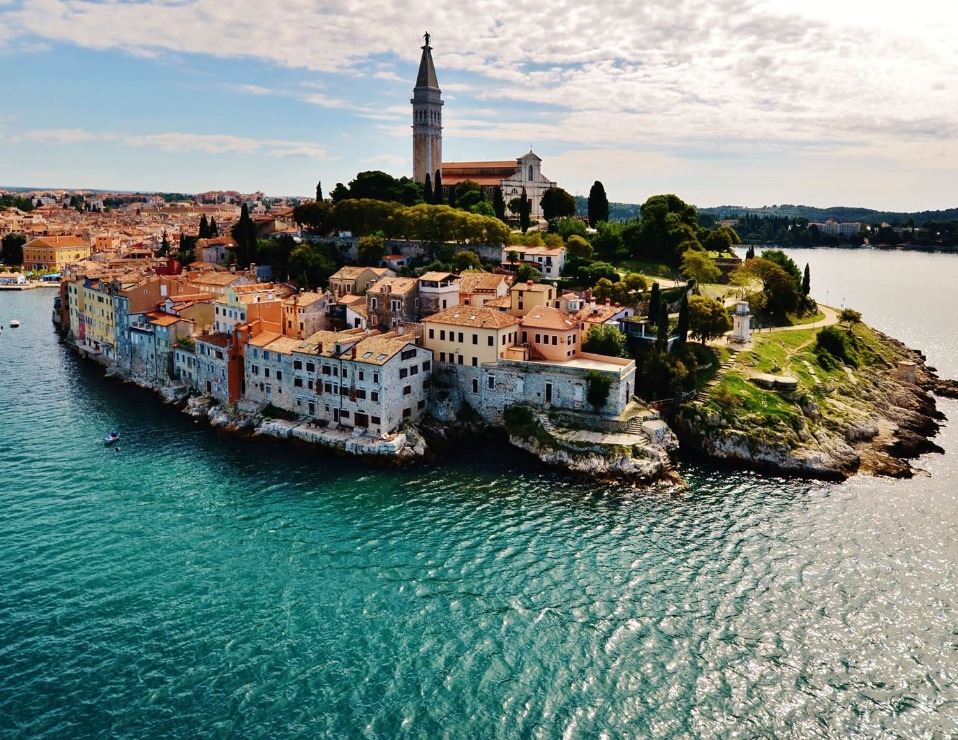
Rovinj’s life started on what used to be the island of Mons Albanus. The first archeological traces of life date back to the Bronze Age, and the old city started developing in the 3rd century.

At the beginning of the 18th century, the city started expanding outside the city walls to the mainland. The channel between the island and the mainland was filled with earth in 1763. And so, the old part of the city found itself on a peninsula. The old city bears witness to the times gone by and the diligence of local masters.

The limited space conditioned the construction of narrow houses, narrow streets and small squares. The characteristically built chimneys are a special feature of the old city as well. Thanks to the above-mentioned special features, the old city was proclaimed a monument of culture in 1963.
Grisia

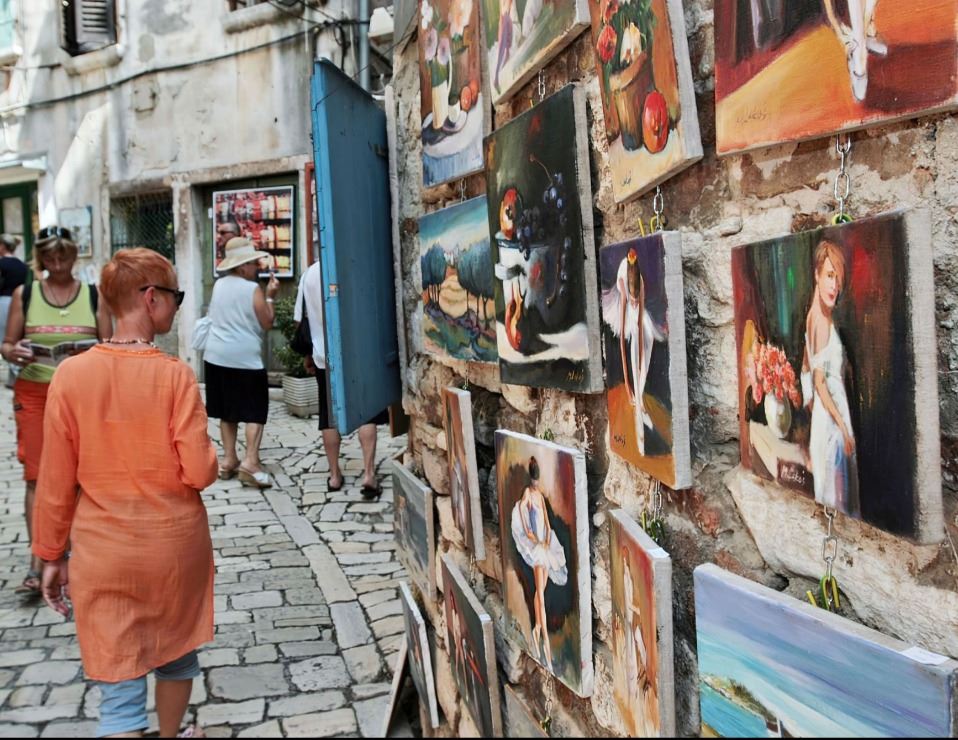
Grisia Street is a beautiful street with cascading steps that leads up to the plateau of the parish church of St. Euphemia. It belongs to the most recognizable trademarks of the old town of Rovinj. The street is picturesquely cobbled with winding stone staircase. It is unique for its one-day art competition exhibition, which has been organized in Grisia continuously since August 1967 by the Rovinj Heritage Museum.

The exhibition was created at the initiative of members of the Art Colony who aim to contribute to the spreading of visual arts and the revitalization of the town by gathering artists and displaying their works out in the open. A great number of artists display their works on Grisia attracting the attention of visitors and tourists.

Artists such as Mascarelli, Bassani, Matić, Milić, Škrnjug, Šumonja, Vuličević and many others participated in this street exhibition numerous times.
Town Clock

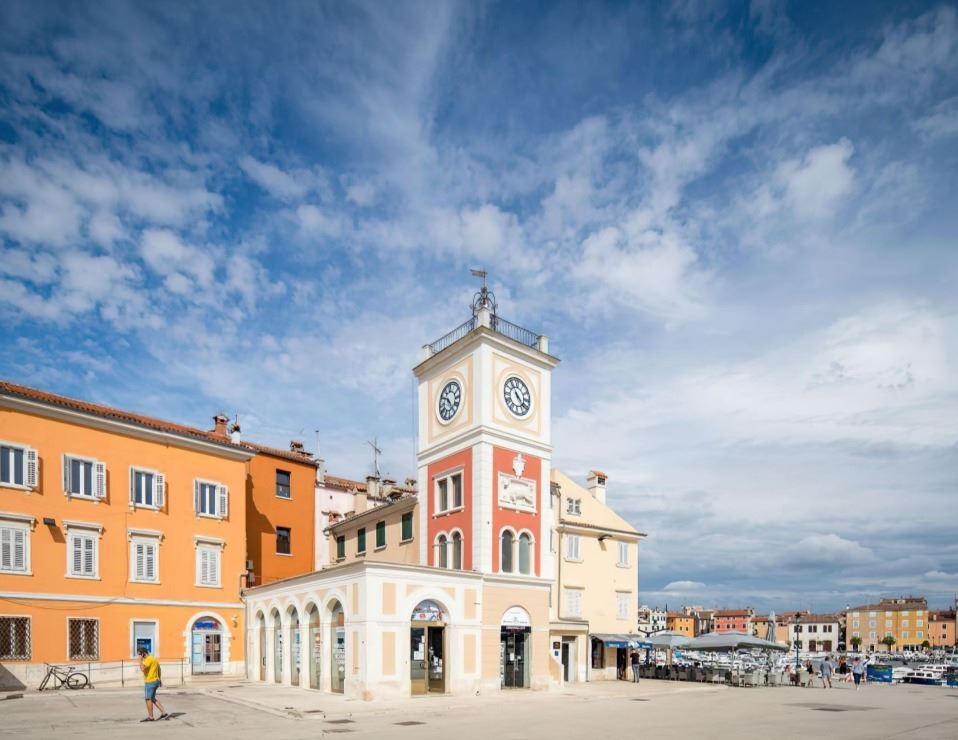
It is located on the main town square in Rovinj. It once represented the tower on the south corner of the former town walls.

Built in the 17th century, the tower was extended several times. There used to be a prison below the tower for minor offenders. The town clock with its Venetian lion, the symbol of Serenissima dating back to mid-19th century, was situated on the town gate fort near the Califfi Palace.
The Antonio Gandusio Theater

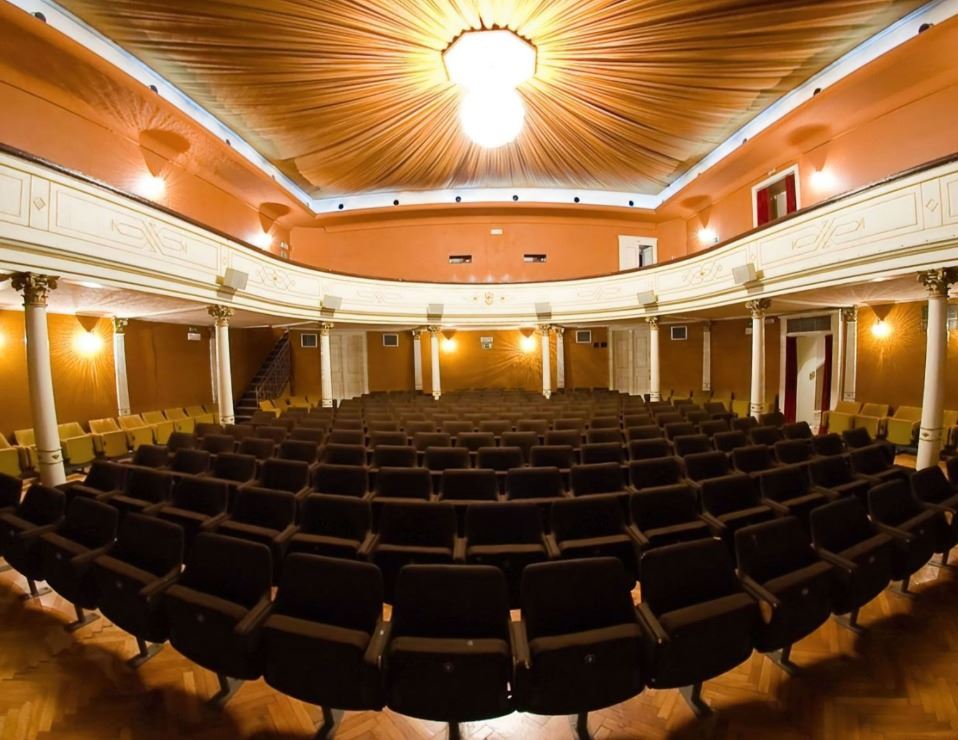
It is a visionary legacy of one of Rovinj’s mayors from the late 19th century, Nicolo de Califfi. It is interesting to know that he prepared the drawings for it himself and the building was completed in 1854. With its baroque grace and perfect integration in the original environment, its elegant and functional interior design with a special emphasis on detail, the Antonio Gandusio Theater deserved to be called a true attraction of both Rovinj and the Croatian cultural heritage. The theater was named after one of the greatest theater and film comedians, an Italian ‘’novocento’’ born in Rovinj in 1873.

Since these times to date, the popular Gandusio has never stopped being a gladly visited home of drama burlesque, operas and operettas, political and other conventions and events, as well as true musical & theatrical rarities such as the Calvachino, a masked dance to the beat of mazurka, gallop, waltz and polka.
Centre for Historical Research

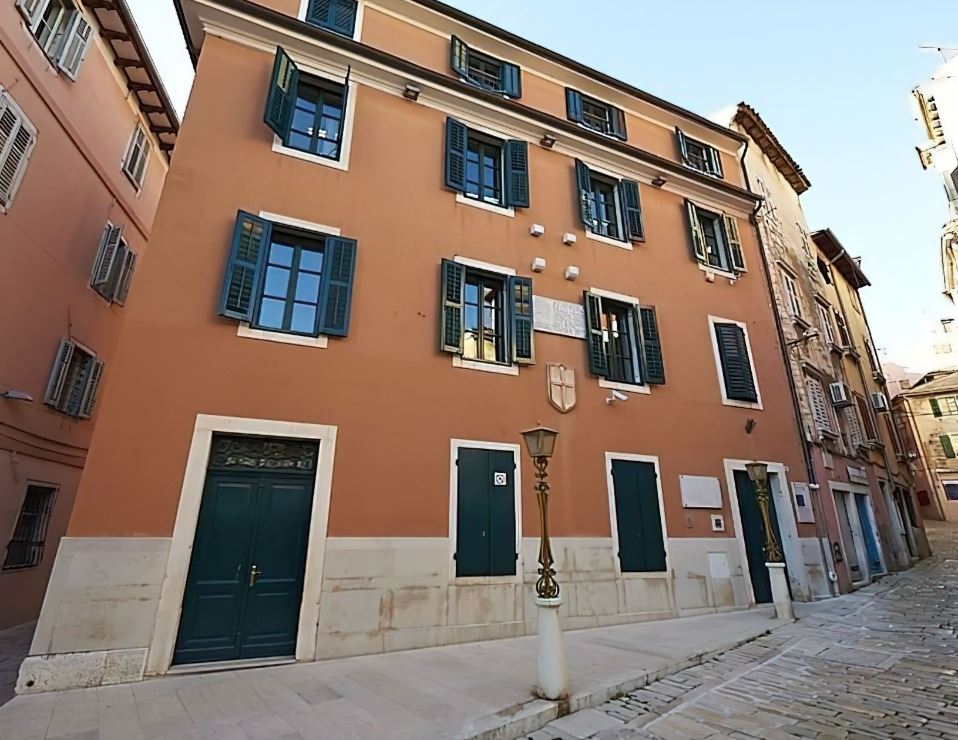
Founded in 1968, it is situated in the immediate vicinity of the city palace. The Center disposes with a large library (more than 80.000 works) that has had the status of „Biblioteca depositaria del Consiglio d´Europa“ since 1995  – the library where the European Council’s material, related to the issues from human rights and minority rights, is archived.

From 15th to 18th century, this was the location of St. Damjan’s public granary and then in 1872 it became the location of the first tobacco manufacture in Rovinj.
Balbi’s Arch
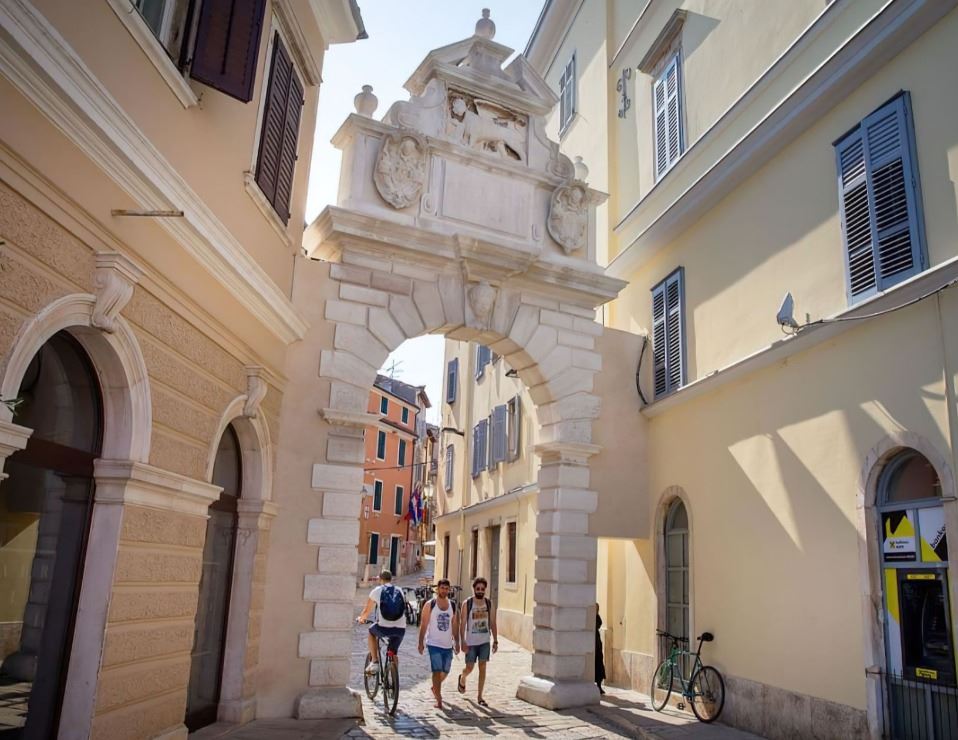
Where the Balbi’s Arch stands today, there used to be the main gate to the fortified city of Porton della Pescheria. The old gate was pulled down in 1678/79 and the Balbi’s Arch was built in its place. It was built during the time of Mayor Daniel Balbi. The inscription written on a stone board placed on the arch bears witness to that fact.

Town Walls and Gates

As early as in the 7th century, Rovinj was surrounded by city walls that were subsequently strengthened by towers. The city had seven gates, three of which have been preserved to this day: The Gate of St. Benedict, The Portica and The Gate of the Holy Cross.

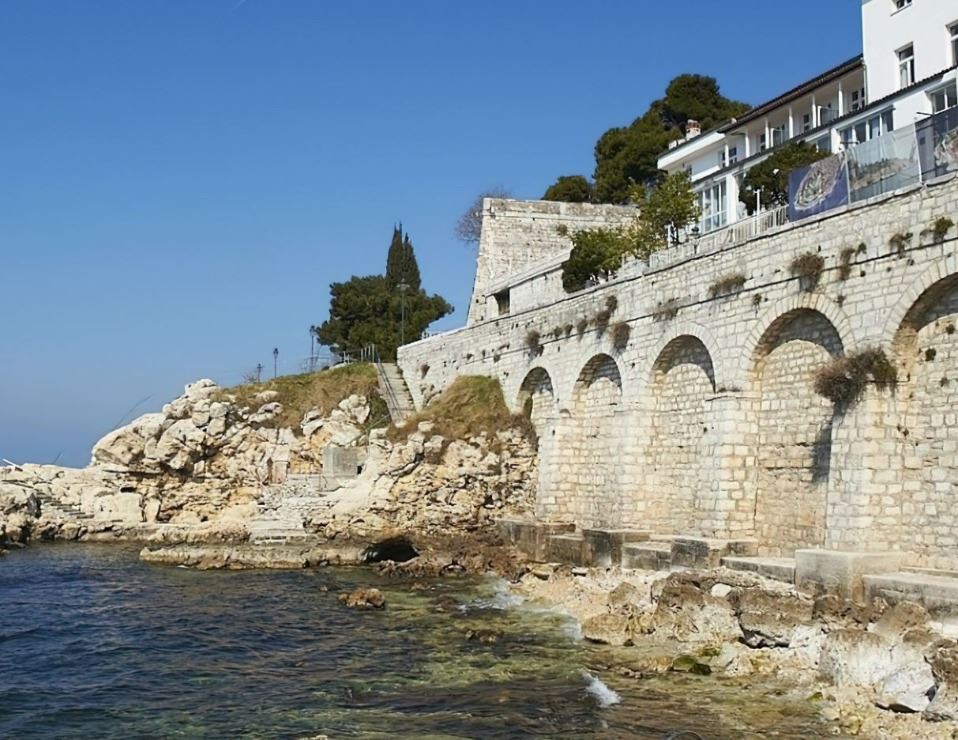
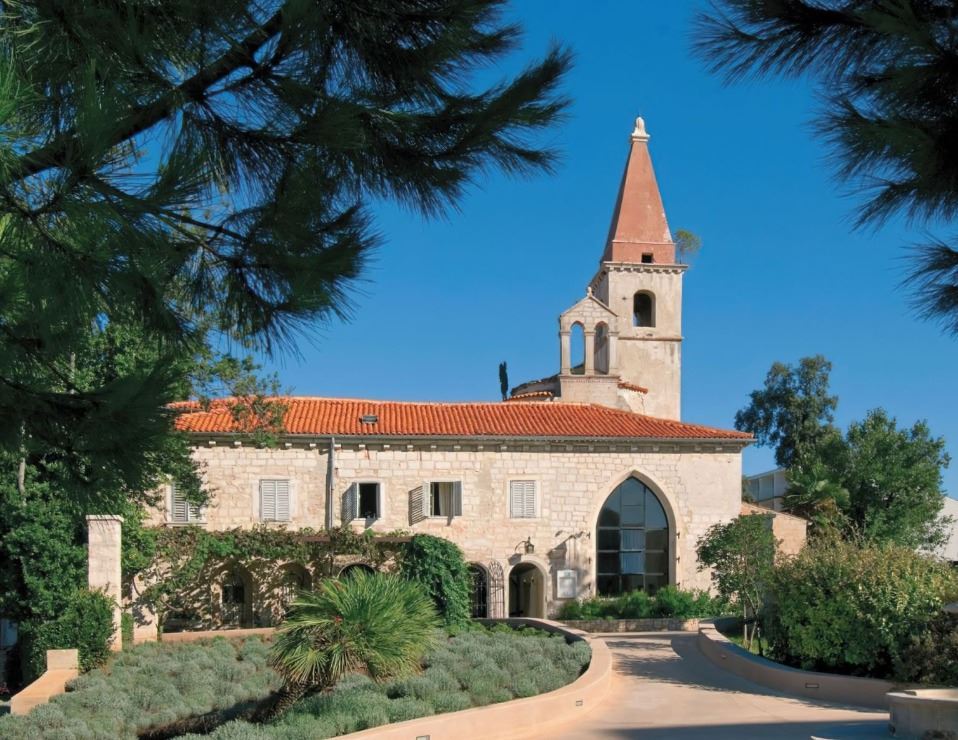
Castle on St. Andrew’s Island

A Benedictine monastery founded in the 6th century. In the 15th century the Franciscans expanded and enlarged it. Baron Hütterott renovated it at the end of the 19th century.

Today, the castle has been turned into a hotel and is decorated by works of the official painter of the Austro-Hungarian Navy, Alexander Kircher.
Source: Croatian National Tourist Board


 

Grand Park Hotel Rovinj

*****

Lone Hotel by Maistra Collection

*****

Monte Mulini Adults Exclusive Hotel by Maistra

*****

Maistra Select Island Hotel Istra

*****

Maistra Camping Veštar Mobile homes

*****